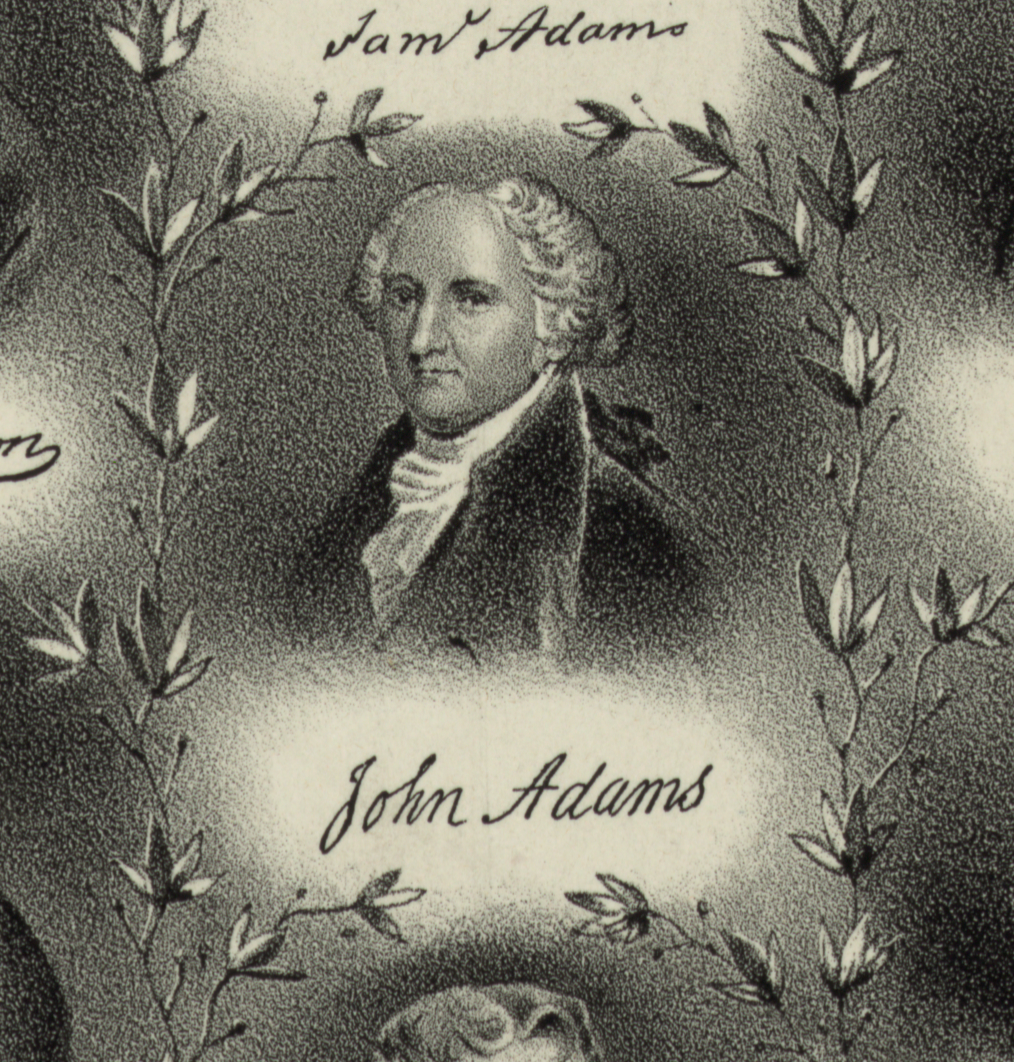
John Adams
State: MA
Age in 1776: 40
Occupation: Lawyer
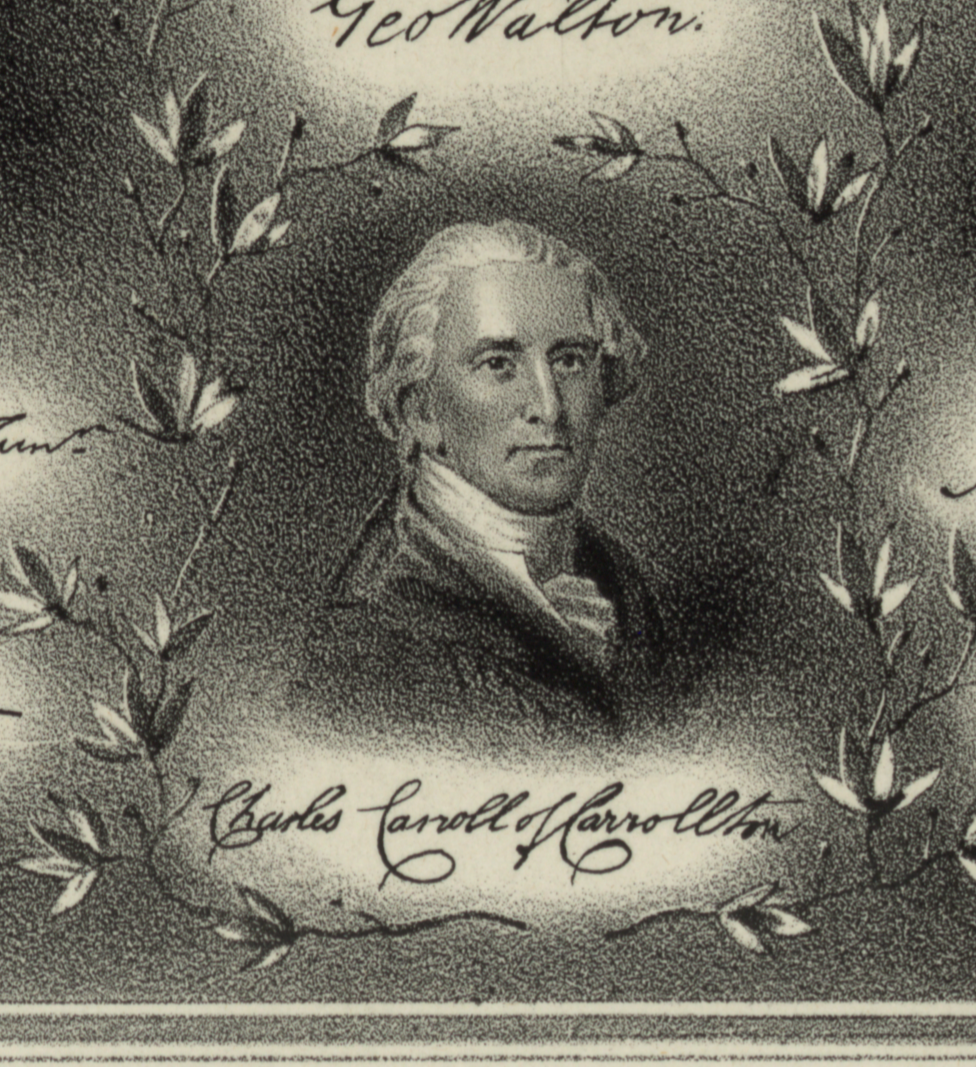
Charles Carroll
State: MD
Age in 1776: 38
Occupation: Merchant, Plantation Owner
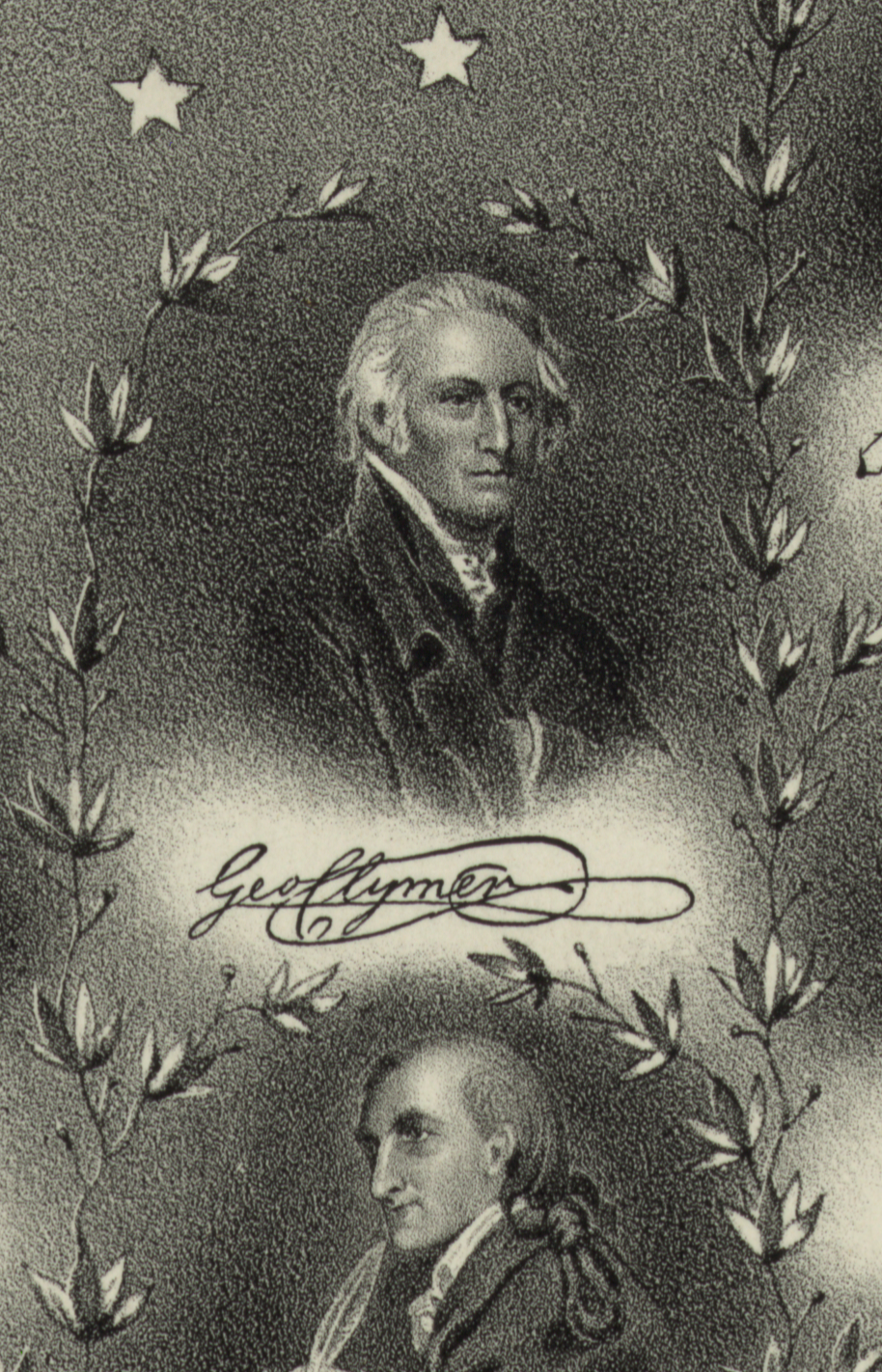
George Clymer
State: PA
Age in 1776: 37
Occupation: Merchant
William Ellery
State: RI
Age in 1776: 48
Occupation: Lawyer, Merchant
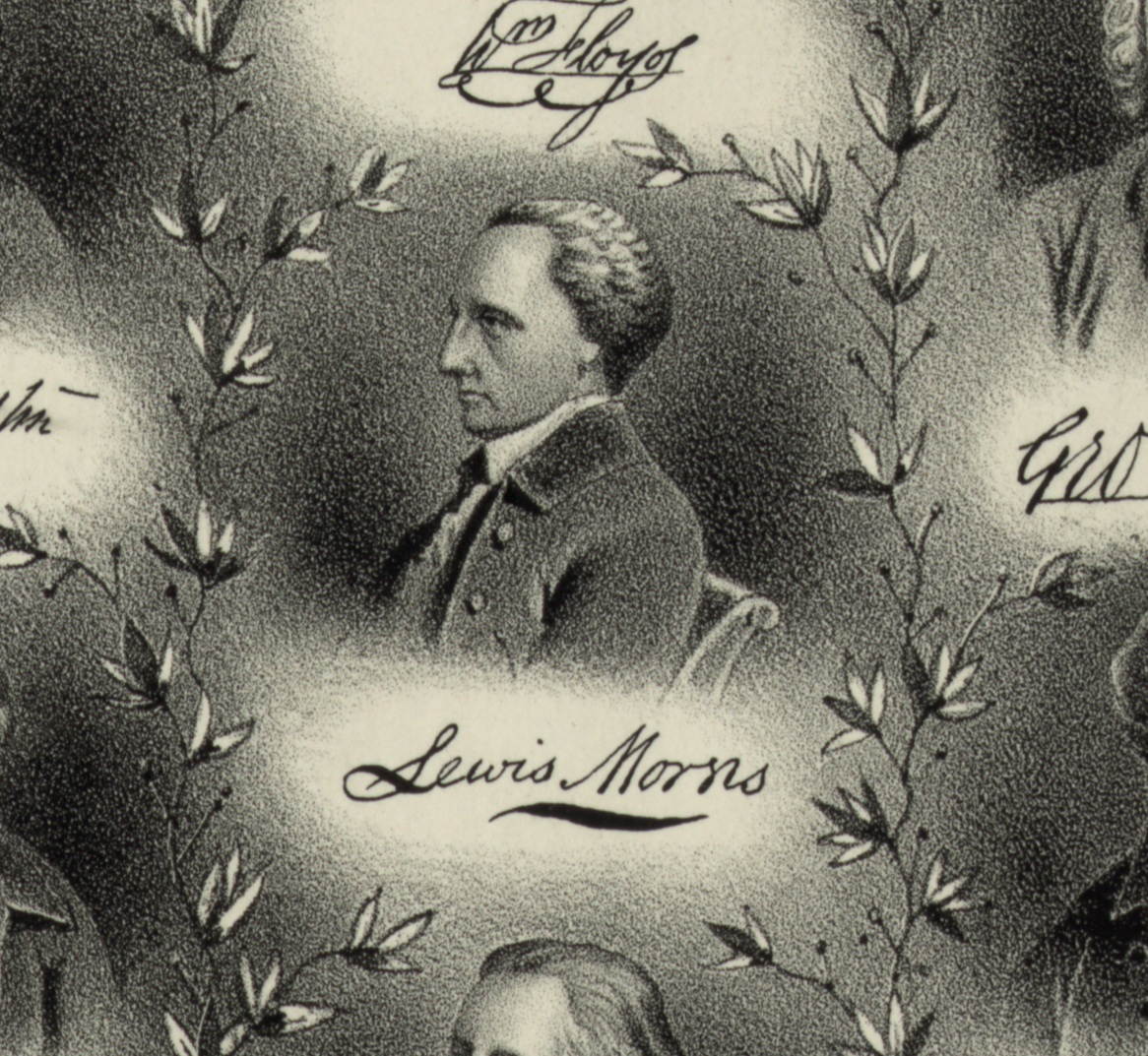
Lewis Morris
State: NY
Age in 1776: 50
Occupation: Plantation Owner
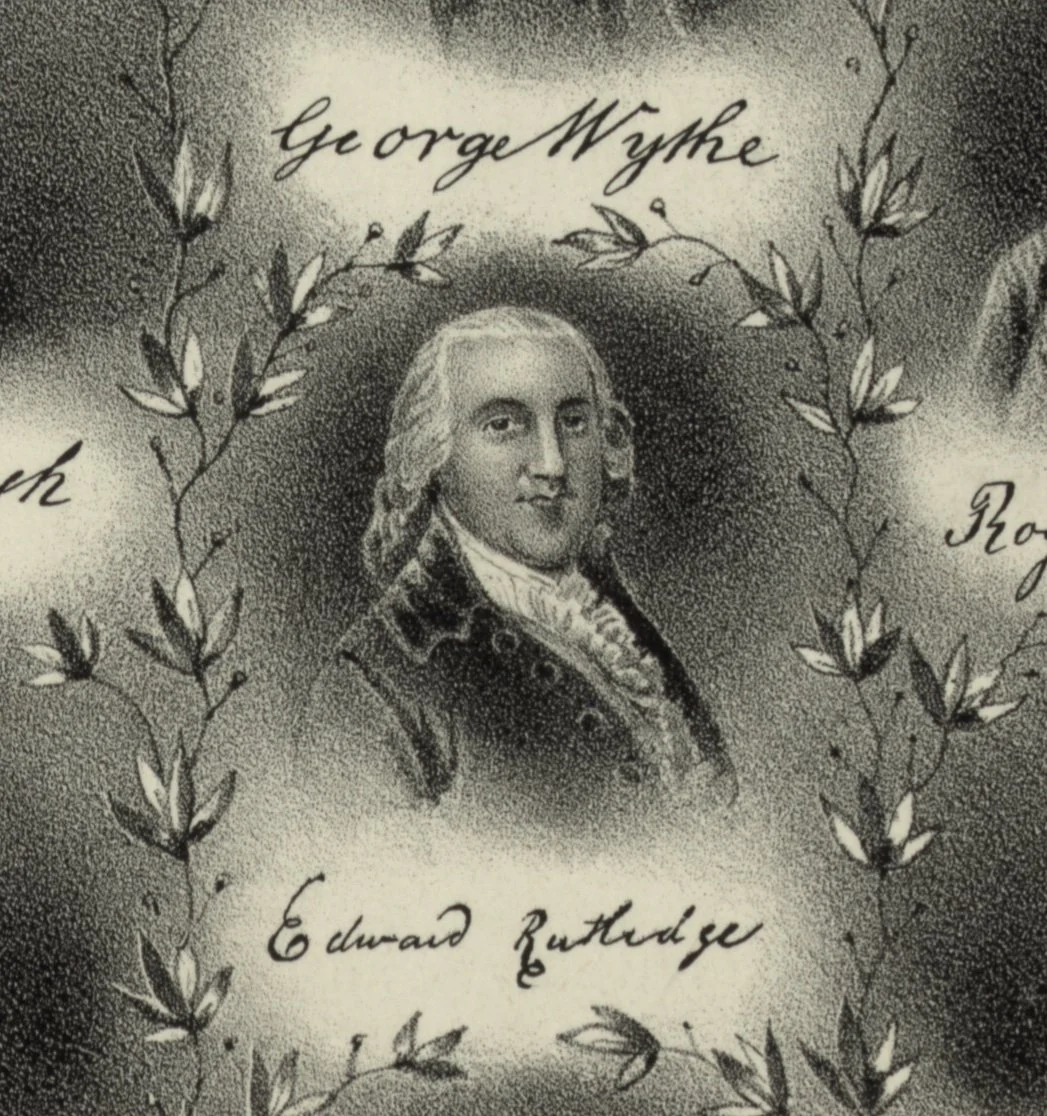
Edward Rutledge
State: SC
Age in 1776: 26
Occupation:
Lawyer, Plantation Owner
Benjamin Franklin
State: PA
Age in 1776: 70
Occupation: Scientist, Printer
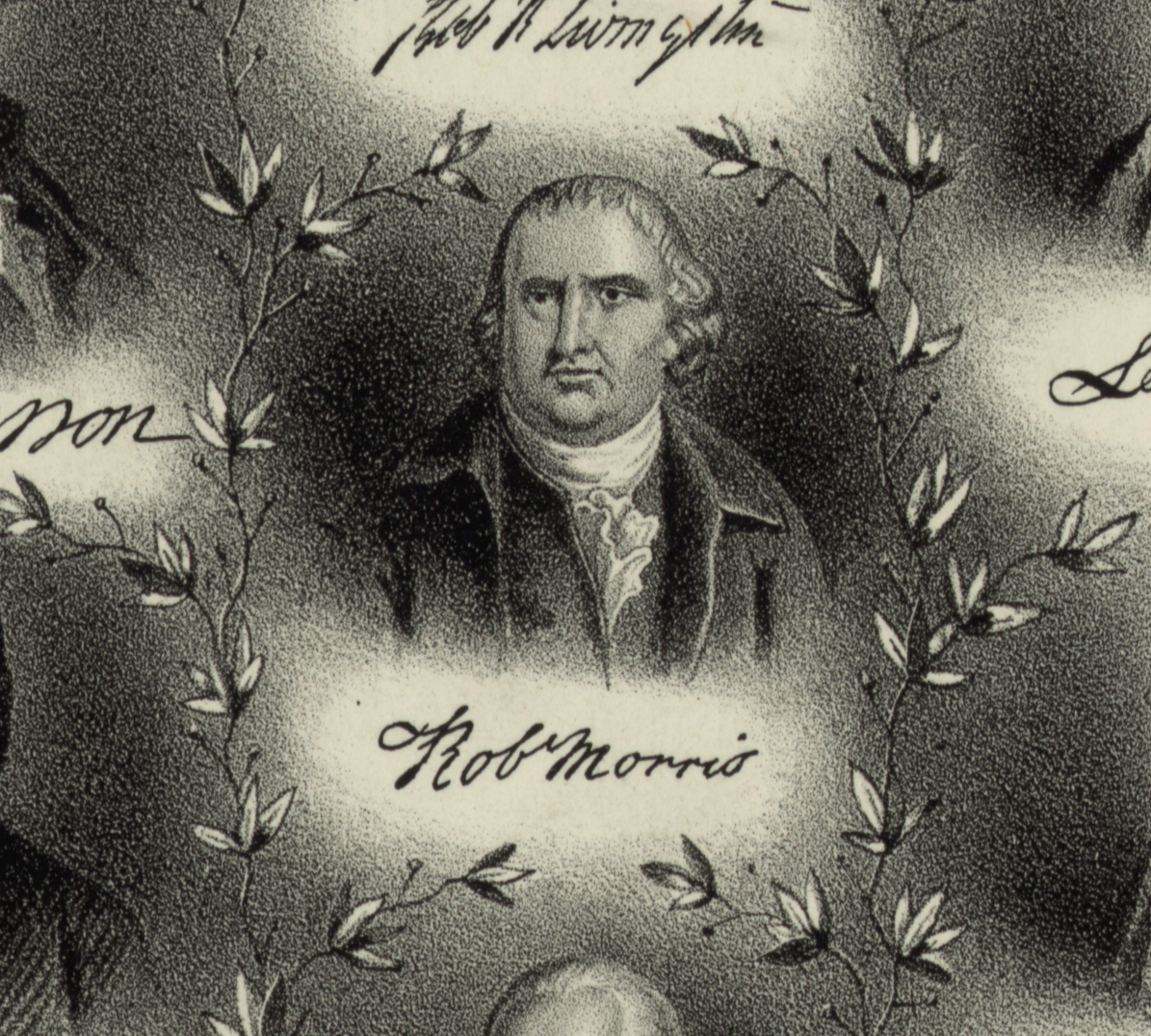
Robert Morris
State: PA
Age in 1776: 42
Occupation: Merchant, Land Speculator
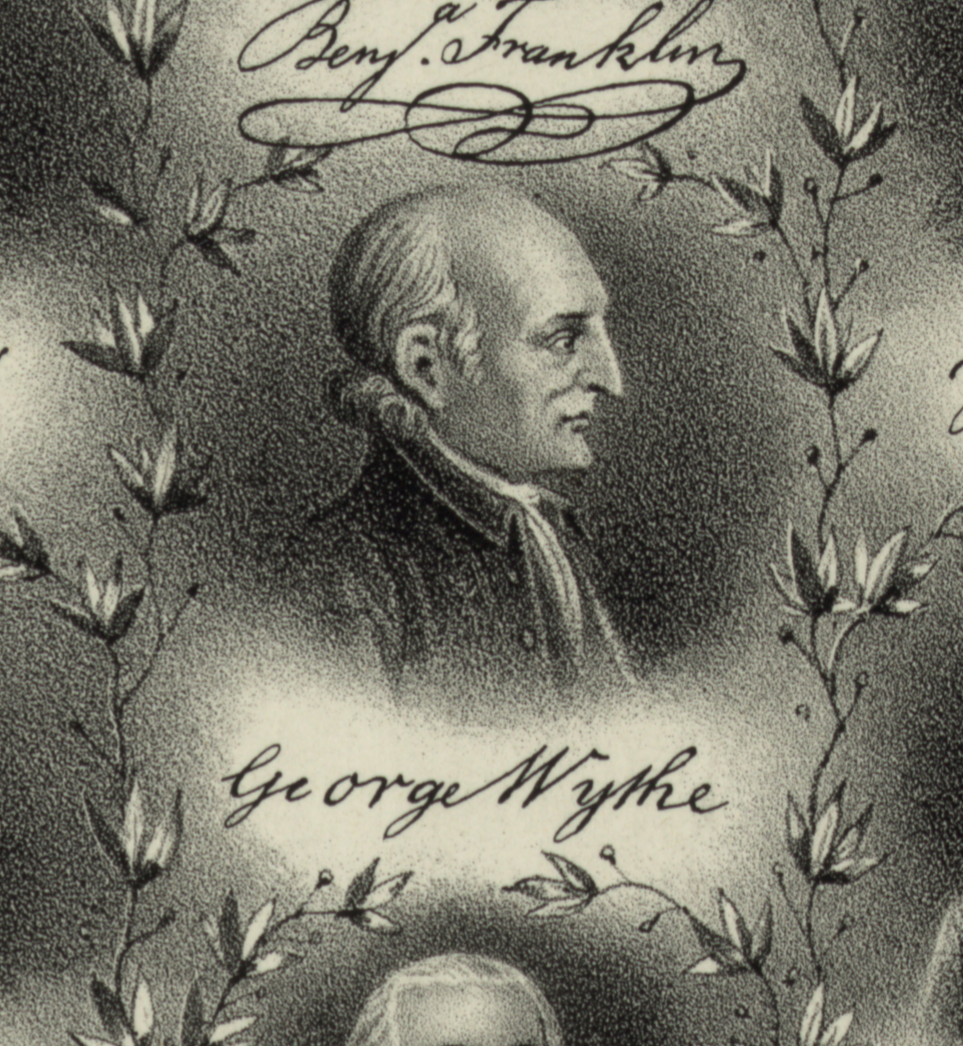
George Wythe
State: VA
Age in 1776: 50
Occupation:
Lawyer
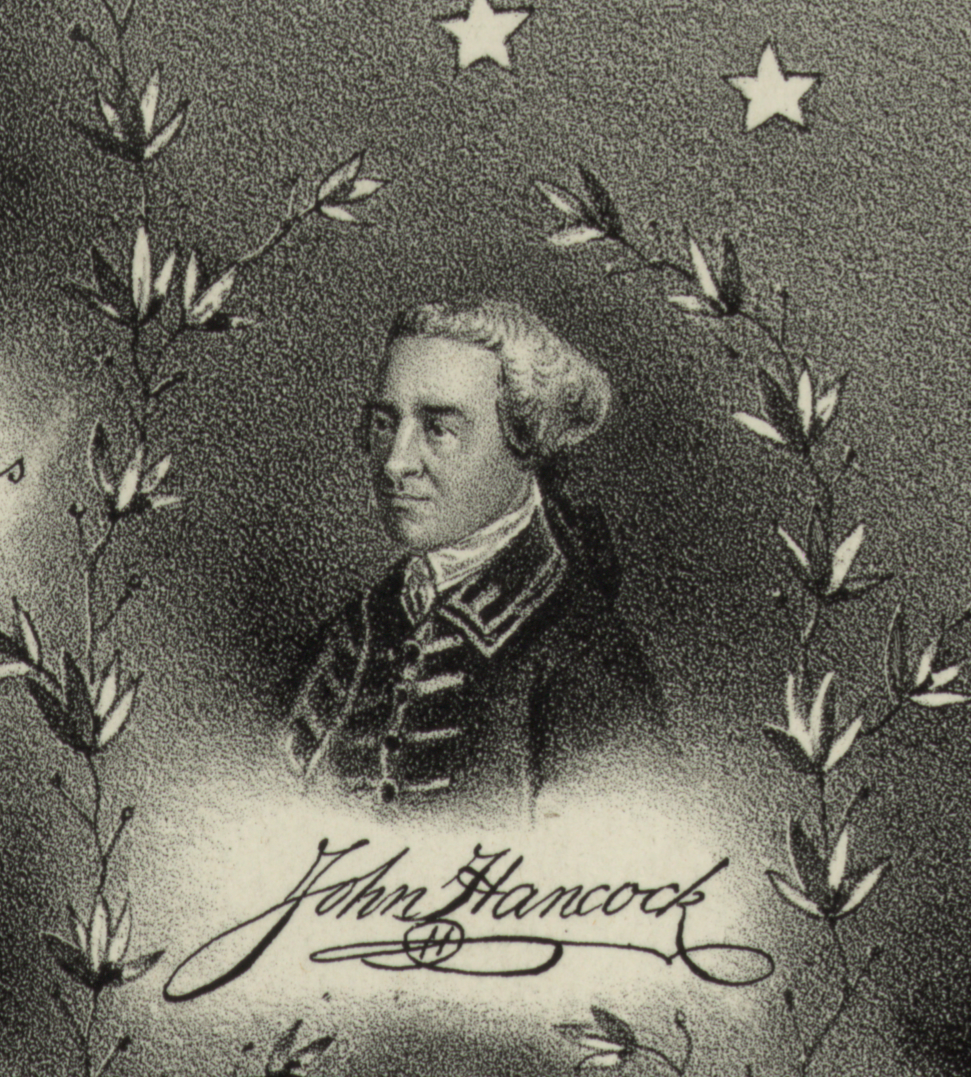
John Hancock
State: MA
Age in 1776: 40
Occupation: Merchant
Thomas Jefferson
State: VA
Age in 1776: 33
Occupation: Lawyer, Plantation Owner, Scientist
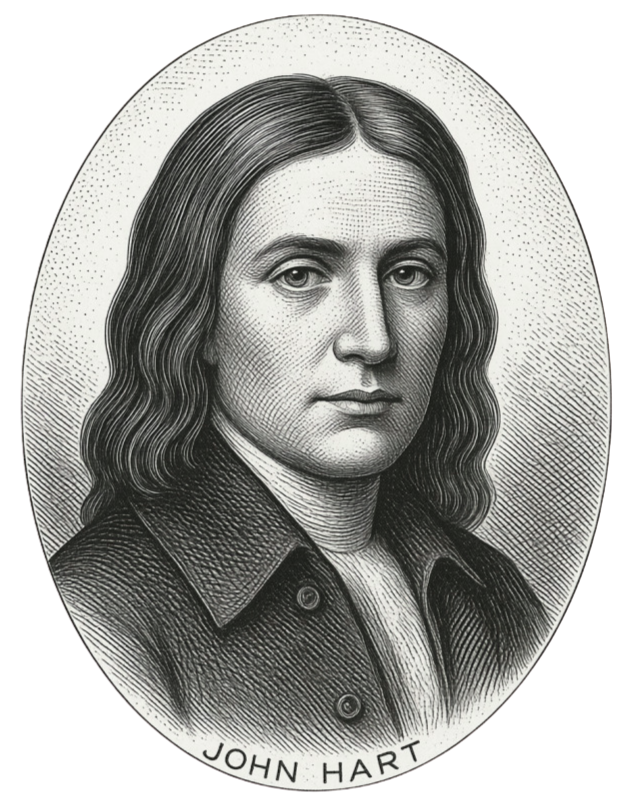
John Hart
State: NJ
Age in 1776: 65
Occupation: Land Owner
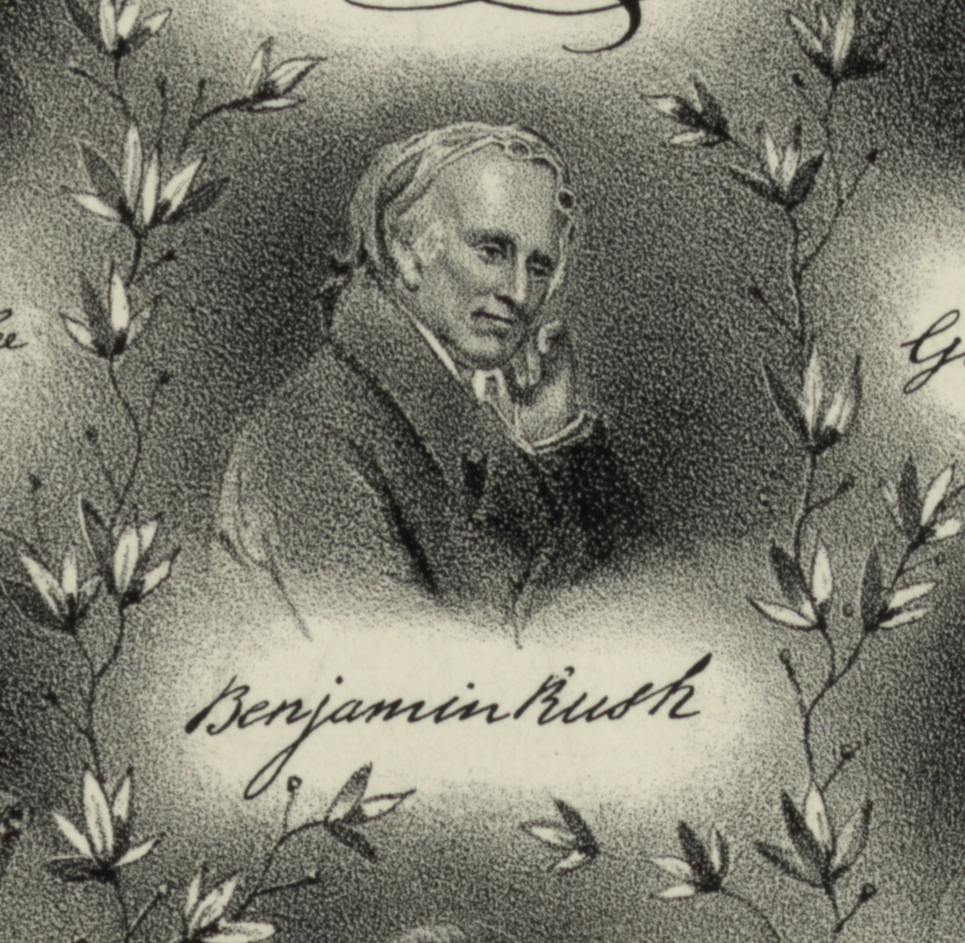
Benjamin Rush
State: PA
Age in 1776: 33
Occupation: Physician
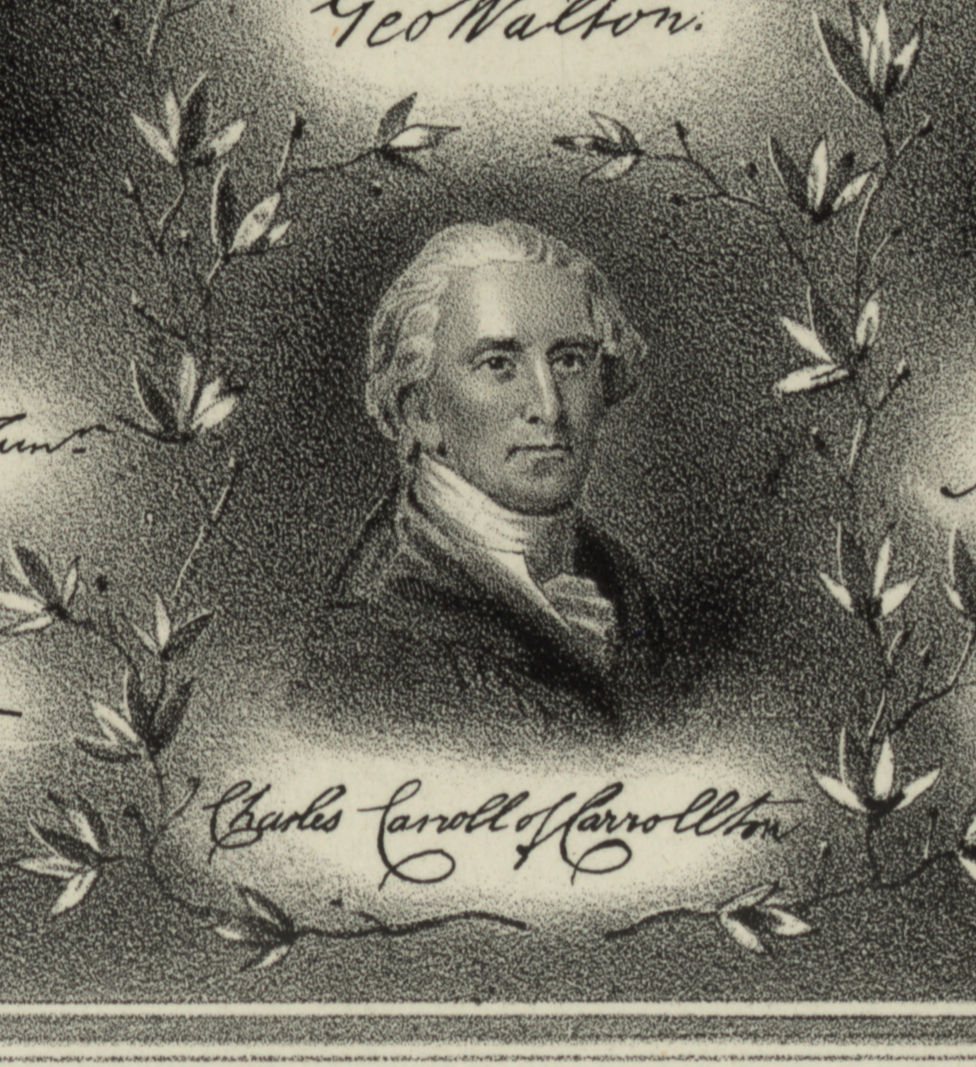
Charles Carroll of Carrollton (Maryland): As a wealthy merchant and one of the largest landowners in the colonies, Carroll risked a "vast sum" by signing the Declaration. His narrative emphasizes the risk taken by the colonial elite.
Carroll was also extremely wealthy. At the age of 12, he traveled to France for his education, and later studied law in London. As a Catholic, he was not allowed to practice law in England or Maryland, so he returned to the colonies at age 27 as a businessman. Because of his faith and connections, Congress believed he could help build relationships with Catholic countries such as France. Gaining allies overseas was critical if the colonies hoped to defeat Great Britain.
During the American Revolution, most colonial leaders were Protestant. However, the Continental Congress understood that gaining support from different religious groups—and from foreign nations—was important for the success of the revolution. That is one reason why Charles Carroll of Carrollton played such an important role. Carroll was one of the few Catholics involved in colonial politics, and his presence helped show that the new nation could support religious freedom.
Charles Carroll first became well known through a public debate printed in the Maryland Gazette. Writing under the pen name “First Citizen,” he argued against unfair taxes and government fees. He also supported the idea that church and government should remain separate. His opponent in the debate was Daniel Dulany, an important political leader in Maryland. When people eventually discovered that Carroll was the writer, some critics attacked him because he was Catholic. Despite this, Carroll stayed calm and respectful in his arguments. Many readers admired his strong defense of liberty and fair government.
In 1776, the Continental Congress asked Carroll to join an important diplomatic mission to Canada. He traveled with well-known leaders Benjamin Franklin and Samuel Chase. Congress hoped Carroll’s French language skills and his Catholic faith might help convince the people of Canada to join the American cause. If Canada had joined the colonies, it would have strengthened the revolution. In the end, the mission did not succeed, but it showed how valuable Carroll’s background and abilities were to the Patriot leaders.
Charles Carroll signed the Declaration of Independence on August 2, 1776. According to a popular story, someone joked that there were many men named Charles Carroll and that he might escape punishment from the British if his name was unclear. Carroll responded by adding “of Carrollton” after his signature, making it clear exactly who he was. By signing, he risked losing his property and his fortune. A witness reportedly whispered, “There goes another million,” referring to the great wealth Carroll put at risk in support of American independence.
Carroll’s actions showed that the fight for independence included people from different backgrounds and beliefs, united by a hope for freedom.
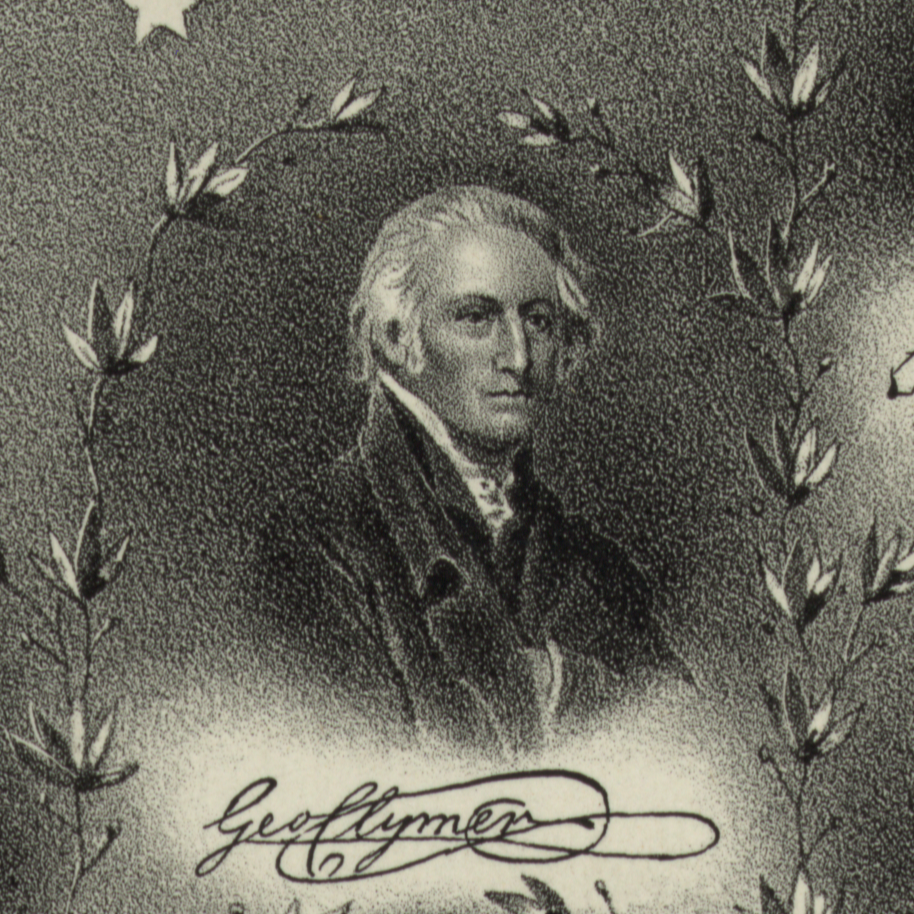
George Clymer (Pennsylvania):
A merchant by trade, Clymer’s revolutionary contribution was defined by financial stewardship. He was known for his strong organizational skills. He helped lead efforts to boycott British goods, including tea that was taxed by Parliament. These boycotts were meant to pressure Britain to change its policies. Because of his careful management and leadership, the Continental Congress chose Clymer to serve as one of the first Joint Treasurers of the United Colonies in 1775. In this role, he helped manage the money needed to support the Continental Army during the early years of the war.
Clymer served as the Continental Treasurer and was a key figure in the Pennsylvania Bank, a private venture that raised funds to purchase desperately needed supplies for Washington’s army when public credit had collapsed. Clymer sometimes contributed his own wealth to keep the young nation and its army supplied.
William Ellery (Rhode Island): Before his congressional service, he began work in his father’s merchant business, became a customs officer, and later a clerk of the court. He began practicing law in 1770 at the age of 43.
Ellery was first elected to the Second Continental Congress in May 1776. As one of two delegates from Rhode Island, he replaced Samuel Ward, who was too ill to continue. One of twenty-four lawyers in Congress, Ellery served on the Marine Committee, helping develop a plan to outfit six fully staffed ships anchored in Providence, ready for battle with Britain. His later service on the Board of Admiralty gave him full oversight of the nation's naval affairs.
He utilized his background to serve on influential committees, including those for public accounts and the relief of wounded soldiers.
On August 2 he placed himself in a position to observe the faces of each signer of the Declaration, noting the utmost resolve of each man.
Ellery saw his home and property in Newport burned by British troops in 1776. The destruction was meant as revenge for his support of the Patriot cause.
Gifted in debate, William Ellery continued to serve in politics and argue before the Continental Congress until 1785, through the adoption of the Articles of Confederation and up to the reassessment that would lead to the writing of the Constitution.
To save money, he rode on horseback to the session of Congress instead of paying for the comfort of a carriage ride. He observed that seeing him, few people would have realized that he was a leader of the nation.
After retiring from the national political scene, he was appointed Chief Justice of the Supreme Court of Rhode Island.
Ellery lived until 1920, one of only three signers to live into their 90s.
Fun fact! Ellery was home-schooled by his father! He began attending Harvard at the age of 16.
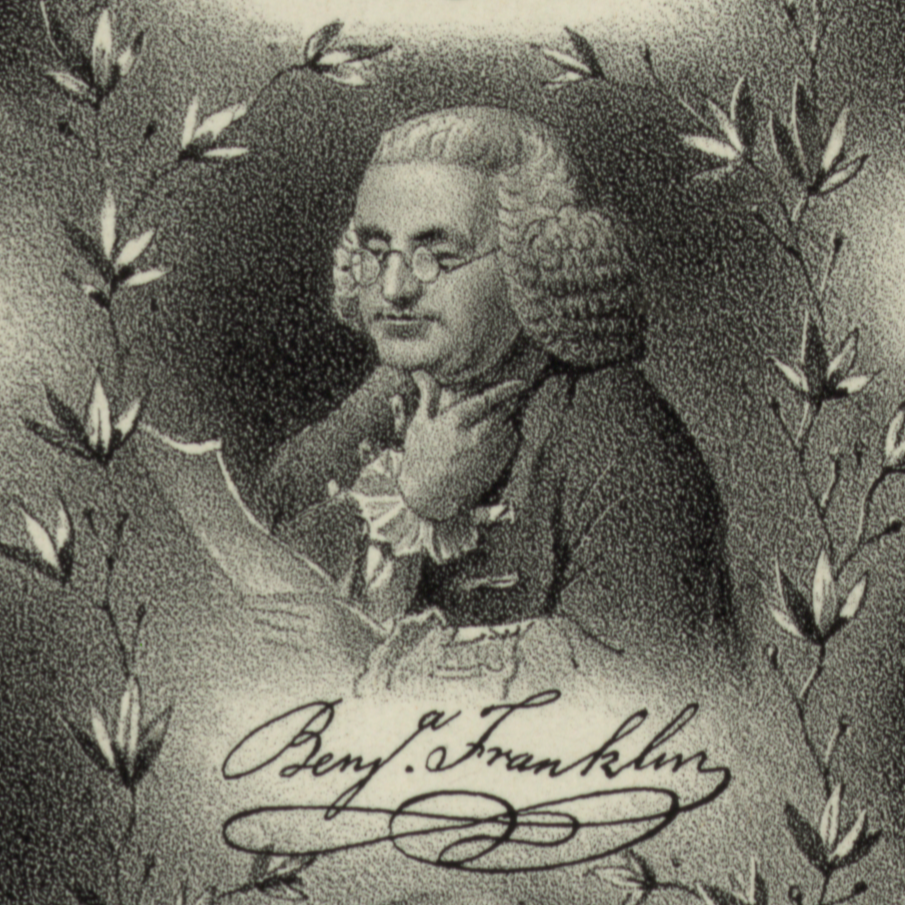
Benjamin Franklin (Pennsylvania) Benjamin Franklin was famous for his scientific curiosity and many inventions. He created useful devices such as the lightning rod and improved eyeglasses known as bifocals. Franklin believed strongly in observation, experimentation, and clear thinking. These scientific habits also influenced his political work.
Born in 1706, one of 17 children, his father could only afford two years of formal education for young Benjamin. At the age of 12 he was apprenticed to his older brother, a printer by trade and founder of a Boston newspaper. Ben soon began writing letters to the newspaper under the pseudonym Silence Dogood, earning the wrath of his brother when the source was discovered. He later achieved success as the author and publisher of Poor Richard’s Almanac. including entertaining proverbs such as “Fish and visitors stink after three days.”
He also used his experience as a printer and writer to help shape important political ideas. Franklin offered advice and editorial guidance to Thomas Paine while Paine wrote the influential pamphlet Common Sense. Franklin believed that clear, logical explanations could help people better understand the reasons for independence.
Franklin joined diplomatic efforts to gain support for the American cause, traveling to Canada in an unsuccessful bid for support for the revolution, and to France where he found common ground and assistance for the upstart nation. He remained in France for nine years, eventually assisting in drafting the final treaty between France and England and the fledgling US which guaranteed the end of the war and independence.
Franklin’s intellectual contributions provided the rationale and structure for the new Republic. He received an honorary doctoral degree, and after that became known as Dr. Franklin. He was only one of six men to sign both the Declaration of Independence and the Constitution.
John Hancock (The Propagandist and Financier): It is said that Hanock inherited the "greatest body of wealth in New England," Hancock’s path to radicalism was accelerated by a "political coincidence." When his ship arrived in Boston carrying news of the Stamp Act repeal, he was hailed as the instigator of the repeal rather than a mere messenger. Embracing this role, he funded protests and used his shipping empire to conduct political intelligence, famously ignoring British agents who attempted to search his vessels, the Lydia and the Liberty.
The son of a clergyman, and orphaned as a young child, Hancock was raised by his wealthy uncle and inherited his shipping business. His business was directly impacted by the British laws put into place in the early 1770s.
Hancock, as President of the Second Continental Congress, was the only signer on July 4, 1776. The document was then sent off for printing and distribution throughout the colonies, and an official copy was made on parchment paper. This is the copy that is held in the National Archives.
In early August, the Declaration was signed by all the delegates who were present in Philadelphia. A few of them could not sign it until January of 1777.
All the signers of the Declaration feared retribution from the British. Hancock signed the largest, boldest signature on the declaration so that King George III wouldn’t need his spectacles to read it.
Hancock later served as the governor of the Commonwealth of Massachusetts.
Early on, Hanock was a loyalist. He had many connections overseas connections and was in England for business purposes in 1861 and witnessed the coronation of King George III.
What is a commonwealth? There’s no difference between a commonwealth and a state. The name emphasizes its intent to be for the common good of the people.
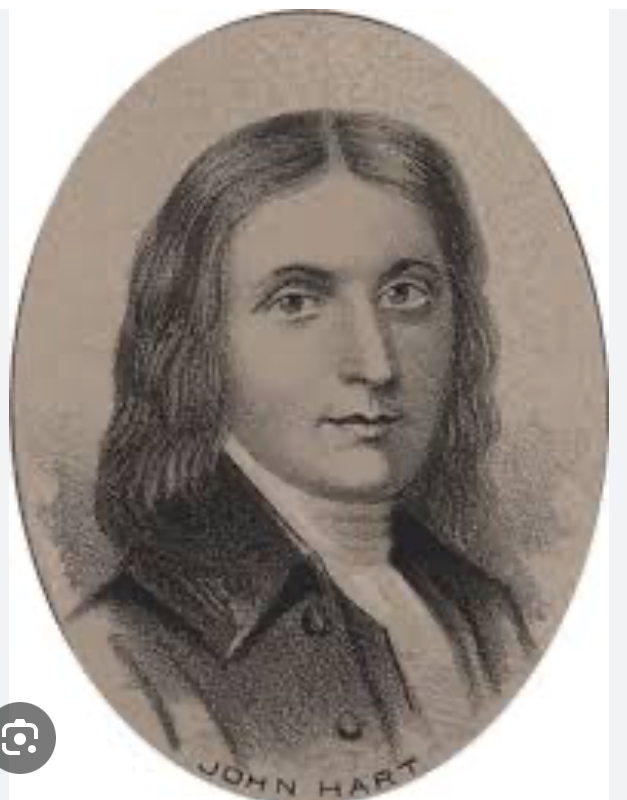
John Hart (New Jersey):
John Hart was a successful farmer from New Jersey who became a prominent leader during the American Revolution. Born around 1713, he was a self-made man who only had a basic education in reading, writing, and math. He became a highly respected member of his community, earning the nickname “Honest John” for his fair character. He began buying farmland as a young man and became a successful farmer. By the 1770s, he was the largest landholder in the town of Hopewell.
Hart served in New Jersey government roles, most notably as a judge of the Court of Common Pleas, appointed there even without formal education.
In 1776, Hart was elected to the Second Continental Congress and signed the Declaration of Independence. Because of this brave act, he became a primary target for the British army. In December of that year the elderly Hart was forced to leave his home and hide in the nearby mountains to avoid being captured while British and Hessian soldiers raided his farm.
Despite these dangers, he continued to support the American cause. He hosted General Washington in June of 1778, and along with his neighbors provided rest and food for 12,000 men of the Continental Army on local farms. After a few days near Hopewell the army fought the British in the Battle of Monmouth, New Jersey. Neither side could claim victory, but a draw was considered a moral victory for the struggling colonial army.
Hart died in 1779, before he could see the victory over the British. His wealth had diminished so much after years of war that his farmland had to be sold to repay his debts.
n Hart…
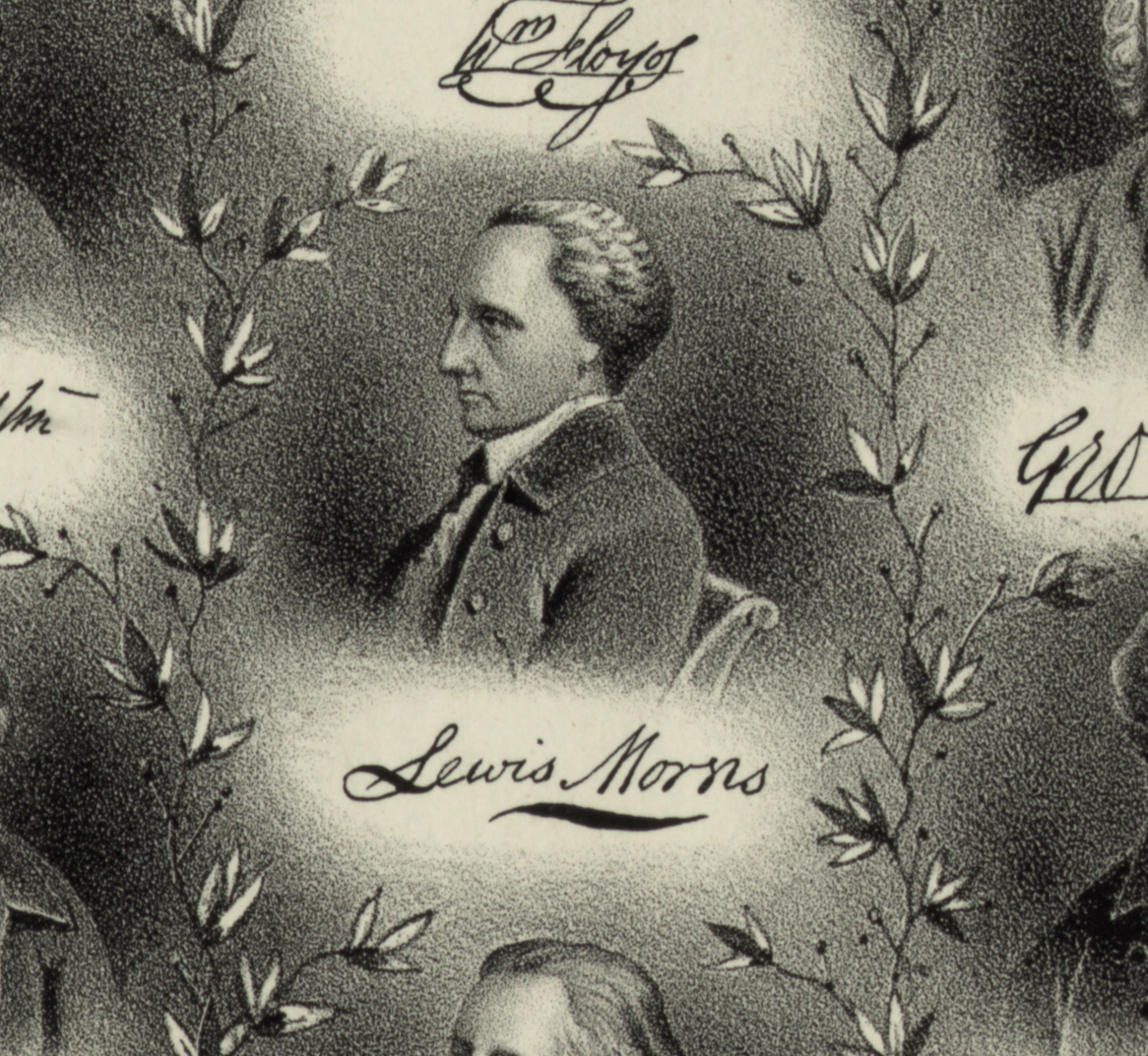
Lewis Morris( New York ):
Lewis Morris: The Wealthy Farmer Who Risked Everything for Freedom
Lewis Morris was born in 1726, at his family's grand home called Morrisania, in what we now know as the Bronx, New York. He was the oldest son in a wealthy family and received his early schooling at home from a tutor. He went to Yale College and graduated in 1746. He and his wife Mary raised ten children. When his father died in 1762, Morris took over the family estate and became the Third Lord of the Manor.
As England began to pass unfair taxes and laws, Morris became a strong leader for the colonies. In 1775, he was sent to the Second Continental Congress, where he worked on a committee with George Washington to find weapons and supplies for the army. He even traveled to the western frontier to talk with Native Americans to keep them neutral during the coming war.
In August of 1776, he proudly signed the Declaration of Independence after getting final permission from New York leaders. He also served as a Major General in the local militia to help protect his country.
Supporting the Revolution came at a high cost. The British army destroyed his farm, burned his fences, and ruined his crops. After the war ended in 1783, Morris worked hard to rebuild Morrisania. He became an expert in farming, trying new types of seeds and better ways to raise cattle and hogs.
Morris believed that a free country needed good schools, so he helped start the public education system in New York and served on the state's first Board of Regents. He served as a state senator and helped New York approve the U.S. Constitution in 1788. Lewis Morris died in 1798, at the age of 71, surrounded by his children and grandchildren.
Robert Morris, Jr. (Pennsylvania ):
Robert Morris, Jr. was born in 1734, in Liverpool, England. His grandmother raised him until he was a teenager. At age 14, he moved to Maryland to join his father, who had become a successful tobacco merchant. Robert did not have much formal school; he only attended for about one year before moving to Philadelphia to work as a clerk for a merchant named Charles Willing.
By the time he was 16, Robert’s father died from an infection, leaving him alone in a new country. However, he was a hard worker and very talented at business. By his early twenties, he became a partner in his own shipping and banking company, Willing, Morris & Co.. He quickly became one of the wealthiest people in the American colonies.
As the American Revolution began, Robert Morris became a vital leader for the patriot cause. Although he originally hoped to avoid a war with England, he eventually supported independence and signed the Declaration of Independence. He is often called the “Financier of the Revolution” because he used his own money and business skills to get weapons, food, and blankets for George Washington’s army.
He said to his colleague Horatio Gates “I am not one of those politicians that run testy when my own plans are not adopted. I think it is the duty of a good citizen to follow when he cannot lead…… I do not wish to see my countrymen die on the field of battle nor do I wish to see them live in tyranny.
Initially plagued by accusations that he used his position to profit from the war, Morris regained the respect of his colleagues with his logical proposals on how to finance the war. He later held many important roles in the new government:
• He was the Superintendent of Finance, which was the first executive office in U.S. history.
• He helped start the Bank of North America to help stabilize the nation’s money.
• He is one of only two men to sign all three of America’s founding documents: the Declaration of Independence, the Articles of Confederation, and the U.S. Constitution.
After the war, Morris tried to grow his wealth by buying massive amounts of land across the country. These deals went poorly due to wars in Europe and a lack of buyers. He lost his fortune and became so deeply in debt that he was sent to debtors' prison for three and a half years.
He was released in 1801 after a new bankruptcy law was passed, but he never regained his wealth. He spent his final years living quietly in Philadelphia with his wife, Mary. Robert Morris died on May 8, 1806, at the age of 72. Today, he is remembered for the financial help that made American independence possible
He is one of only two men to sign all three founding documents: The Declaration of Independence, the Articles of Confederation, and the Constitution.
Morris was the only signer of the Declaration who was born in England.
Jefferson
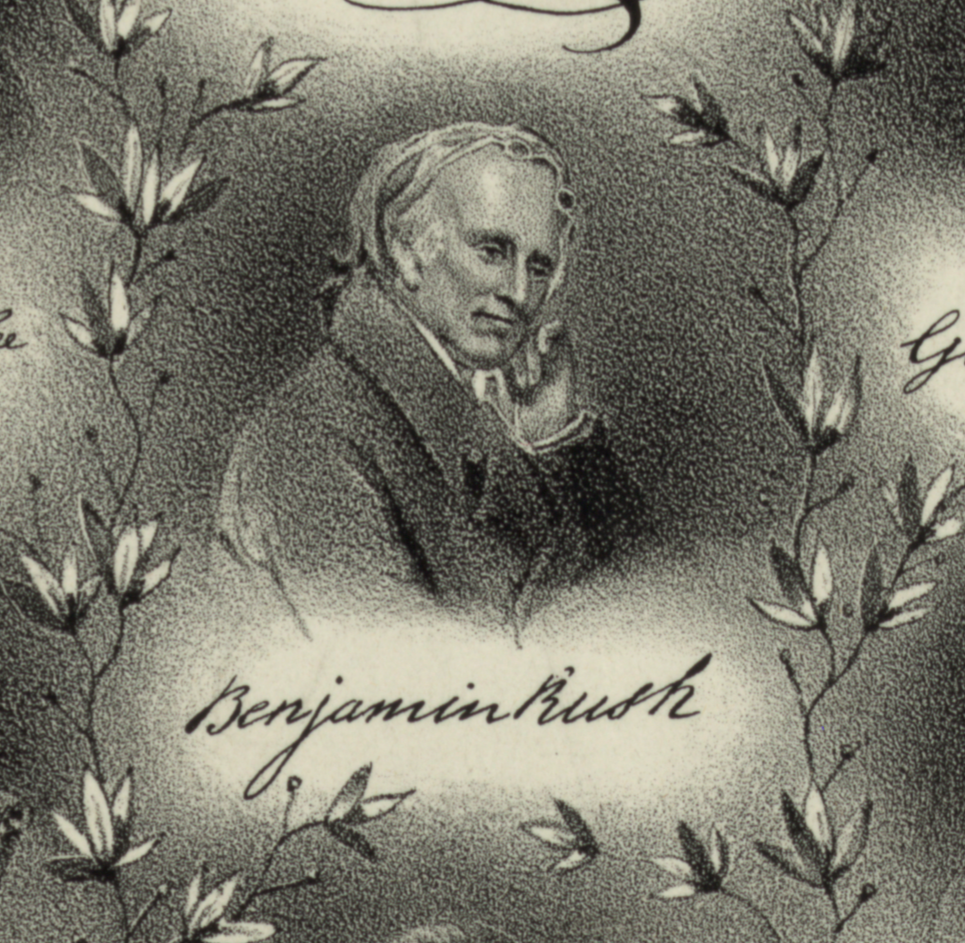
Benjamin Rush (Pennsylvania):
Benjamin Rush received his initial medical training as an apprentice under a physician in Philadelphia from 1761-1766. He earned his MD studying at the University of Edinburgh from 1766-1768.
His political views crystallized in the 1870s It is believed that it was Rush that suggested the title “Common Sense” for Thomas Paine’s political pamphlet using plain language to make a strong case for independence from Britain.
Dr. Rush joined the Second Continental Congress after the vote for independence, but he signed the final copy of the Declaration on August 2 along with the other members of Congress.
Rush served as the Physician General of the Continental Army and did not take pay for his work. Rush believed that good hygiene could prevent many illnesses that spread in crowded army camps. One of his rules required soldiers to keep their hair cut short. This helped prevent lice, which could spread disease among troops. Short hair is still common in many military groups today.
Rush was dissatisfied with the performance of General George Washington and joined forces with two generals and other congressmen in what was called the “Conway Cabal.” The group lobbied to have General Washington replaced as leader of the Continental Army. The effort to replace Washington was unsuccessful and actually strengthened Washington’s standing with the troops and other members of Congress.
Rush cared about the health of ordinary people. In Philadelphia, he helped establish the first free walk-in health clinic so that poor residents could receive medical treatment. Later in his career, he became a pioneer in the study of mental health. In 1812 he wrote an important book that argued mental illness should be treated as a medical condition rather than a personal or moral failure. His ideas helped change how doctors and society viewed mental health. He became an advocate for the abolition of slavery.
Rutledge was.././
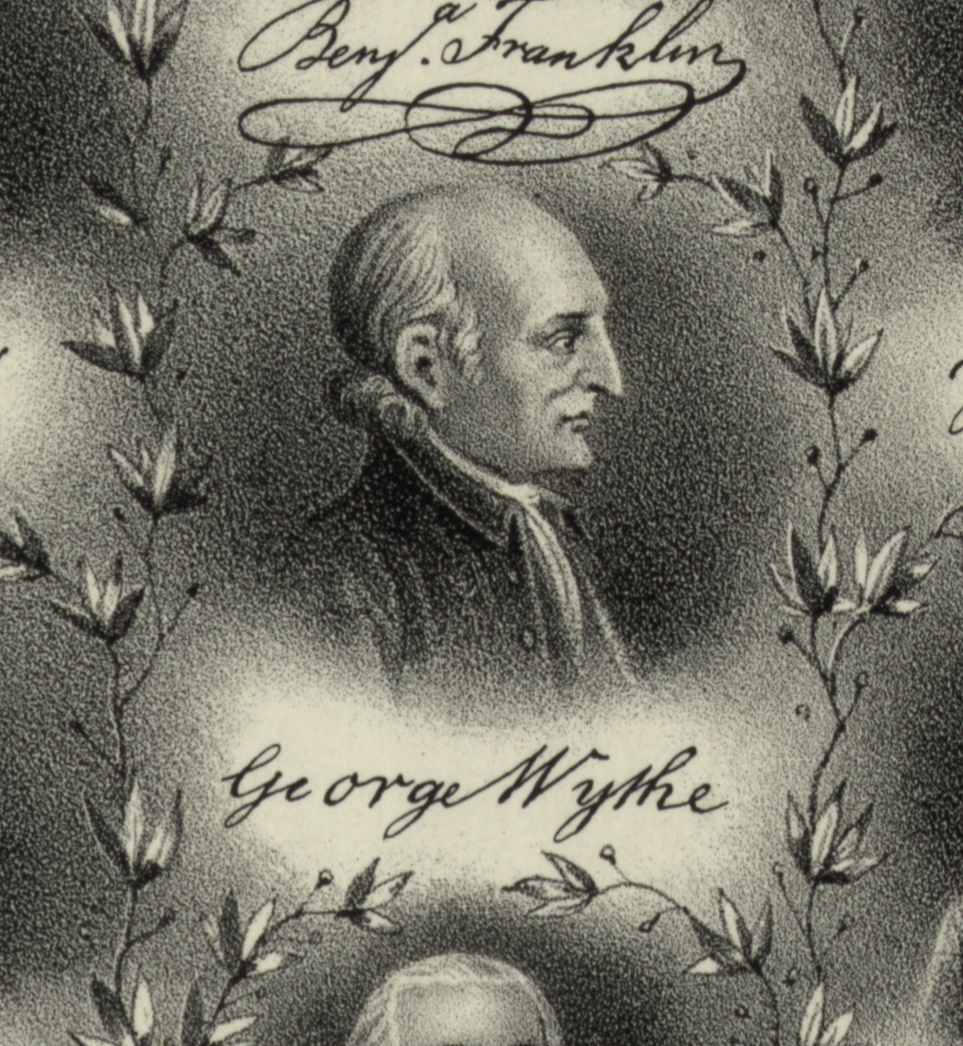
Wythe was……..